Hive Monitors, Hive Sensors, Hive Scales and Beekeeping Apps Do I Really Need Them?
By Mario Chapa
Short answers: no and yes.
You really don’t need a beekeeper app or a beehive monitor to figure out how many bees in a beehive nor would you need a hive scale to figure out how much honey there is in a hive. Much in the same way you don’t need a car to get you from point A to B when you can walk or use a bicycle. But a car is faster, safer and more convenient. It certainly is not cheaper nor necessary, but having a car can make you much more productive and if you Uber or Lyft or rent it, it can also make you some money. Hive monitoring is the same logical choice. Having enough sensors in your hive to make it a smart beehive, will not make you a beekeeper, it will make you a more efficient and a better beekeeper. It will also make you a more successful one because you will be a more informed one.
Imagine trying to drive a car or fly an airplane without any instruments. How would you know where you’re going or how fast you are driving? It’s not impossible, but it would certainly take a lot more effort to find out what your speed is. Just a few centuries ago in the early 17th century, before the invention of the pocket watches, when mariners needed to know their speed, they used to throw a sea anchor or buoy to sea and measure with an hourglass how long it would take for it to pull a certain length of the line. Then the captain or navigator would divide the distance traveled by the time measured and that’s how they would calculate the speed. As you can imagine, just the act of calculating speed took a few minutes and several people to coordinate the dropping, the timing, and calling the distance traveled. Beekeeping without a beehive monitor is exactly the same. In fact, beekeeping hasn’t really changed for centuries. The Langstroth hive, which is today’s most common type of hive, was invented in 1851.
Well, even today, in the 21st century if you are a beekeeper without any bee monitor or a beehive scale or any bee counter of some sort and you want to know how many bees are in a hive, how much honey is in there, or figure out if your bees are healthy or about to swarm; it will take you the better part of an hour just to answer these simple questions. You will have to light the smoker, suit up, smoke the bees, open the hive and disturb them and perhaps squish a few ladies (hopefully not the Queen!), upset them, mess with their carefully controlled beehive temperature and humidity, get them really mad, pull a few frames and boxes, do the inspection and them assemble all back and give the bees time to settle down. And all that just to see everything was OK. Well, with a little bit of bee technology such as The HiveGenie, answering these questions will only take a few seconds and you will have those answers on your phone. You would not need to disturb the hives unless some action on your side is required.
I personally think we are entering the most exciting time in beekeeping. The technological breakthroughs in beekeeping are really making a difference for commercial and hobby beekeepers alike and researchers are enjoying beehive monitors with sensor arrays that are now in the hundreds of dollars rather than in the tens of thousands of dollars and are readily available off the shelf so they don’t have to spend years developing this technology, we at HiveGenie already did. The amount of data we have generated has given us a deeper understanding and insight into the bee world and we are using that knowledge to save hives from their current decaying numbers. So let’s take a quick look at how HiveGenie works and why it can help you reach your beekeeping goals and enjoy your bees more.
The HiveGenie is classified as an Internet of Things device in the Ag-Tech space. It is one of the few outdoor Internet of Things gadgets out there; this in itself is an exciting breakthrough. But the HiveGenie is much more than that. As I have stated earlier, I invented HiveGenie out of necessity. I lost my first three hives when rainwater blocked the entrance of my hives, either suffocating or starving my bees inside. A totally preventable loss if I have had a bee counter that could’ve alerted me that no bees were entering or leaving the hive, an extremely rare event. I could’ve quickly gone to inspect my hives and solve the issue. But I was not alerted. And there was no beehive monitor that could’ve alerted me. Hive scales and beehive microphones would have not picked that. A hive temperature sensor might have not picked that either. So I decided to design a beehive monitor that truly tells me what is going on inside the hive and that is capable of alerting me in real-time when something bad happens to my hive. The HiveGenie has been an ongoing evolving engineering endeavor of a great team of engineers from around the world. We have been working on it for almost six years. We have done and tested hundreds of sensors, prototypes, and software versions. Today, with a few patents in hand, I am confident that HiveGenie is the most advanced and comprehensive beehive monitor in the world. But what is inside HiveGenie? I assure you, it’s way more than a beehive app or beekeeping software or a hive temperature sensor. It is really your electronic beekeeper.

HiveGenie has 27 different individual sensors that give us a perfectly clear view of the beehive health, growth rate, and stores. Yes, we know, we overkilled it but we are engineers, so that’s what we do. The gateway or main box is the communication center and the brain of the unit. All data collected by the sensors travels to the gateways for storage, processing, and transmission via wifi (for wifi units) or cell phone signal (for LTE units). Offline units store the data here until the beekeeper downloads it via Bluetooth. The Gateway has a few environmental sensors such as temperature, relative humidity, and light intensity. These will let us know what kind of weather the bees are dealing with. There is also a GPS and an accelerometer here that will let you track your hives in real-time and let you know when the hives are on the move. If a bear or a thief so much as touches the hive, we will notice and alert you.
The solar panel provides power to recharge the battery, so the HiveGenie will work constantly for years. To date, the longest-running HiveGenie is in the Netherlands and has been transmitting for almost four years.
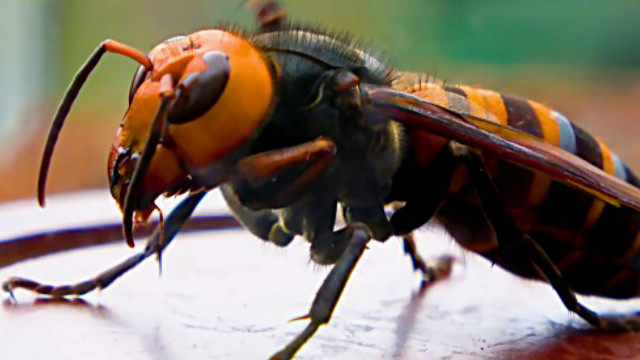
The photo-gates box is the main sensor we also call it opto-board. It is composed of seven individual gates. It is where the bees are counted as they go in or out of the hive. This is the single most important sensor. It is also designed as an entrance reducer and helps prevent attacks from mice, skunks and killer hornets. Yes, we designed the gates just big enough for the bees, so killer hornets will have a very tough time trying to enter and most of them will simply not fit through the gates. The gates are also an excellent way to keep the precious warm and moist air the bees need inside the hive. Through the years, I’ve come to believe that a bee counter is the single most important bee sensor you can have on a hive, followed distantly by weight and temperature. But that’s a subject for another article.
The photo-gates have two more units attached to it; the sniffer and the weight sensor. The sniffer is a sensory array composed of a temperature sensor, a relative humidity sensor, a carbon dioxide sensor and a volatile organic carbon sensor. It is deployed inside the brood box and gives you an excellent view of how well the bees are doing in maintaining the brood temperature and humidity at the optimum levels. A stable beehive temperature and relative humidity mean you have a strong hive and a laying queen. Bees only spend energy keeping the beehive temperature and relative humidity stable if there is brood inside. A sudden increase in temperature could mean the bees are trying to get rid of some parasite or enemy. A slower rise in temperature could simply mean that they need more water to cool down.
The Carbon dioxide sensor and the volatile organic carbon sensors are our latest addition. High levels of carbon dioxide mean your bees are about to suffocate. This can happen in winter storage or when let’s say rainwater or snow blocks your hive entrance. Volatile organic carbons are always present in modern pesticides and chemicals. We don’t have yet much experience using them in the field, but in time, I am sure with the help of our data scientists and AI, we will find some interesting correlations so that we can alert you when a pesticide is dangerously accumulating inside your hives. We also think that we will be able to detect foulbrood and other infestations that generate smell such as excessive mold, wax moth, or hive beetle, but we are not sure yet so we can’t really claim anything regarding this sensor until we collect enough data to feed into our algorithms. But the opportunity is there.
Finally, the hive scale needs no explanation. A hive scale can effectively monitor how much honey your hive has, therefore how much space is left, and alert you when it’s time to add a supper or harvest honey, or even feed your bees.
All these sensors combined give us enough information to feed our algorithms and constantly refine them so we can establish an expected set of parameters for your hive. When those parameters stray too far from the expected values, HiveGenie will send you an alert so you can act quickly and save your bees. The HiveGenie is transparent to bees, in fact, once they get used to the photo-gates, they will defend it if you try to remove it. HiveGenie emits very little radio waves, as it only transmits for a few milliseconds every five minutes, the equivalent of a 30-second call once a day.
In summary, beehive monitors such as the HiveGenie that has the ability to count bees as well as a plethora of many other sensors will definitely help you manage your bees better and faster as you will be getting real-time information every five minutes, as opposed to opening your hives once every two weeks. We are not claiming that you will never have to open your hives, but you will certainly open them with a purpose and far fewer times. I have been using HiveGenie for several years now. I only open the hives a few times a year, specifically only when I am adding suppers, splitting or harvesting honey. I don’t need to open the hive to inspect anything and I hardly ever lose a hive. The HiveGenie is especially helpful when you have your hives in a remote area. Having the constant data will help you decide whether a trip to the site is necessary or not or even when an inspection can be avoided. You can monitor hundreds of hives in seconds rather than in hours. Commercial beekeepers have been able to pinpoint the orchards that cause them the most bee losses and avoid them or negotiate better terms or spraying routines with the farmers. Others have found great application in finding the best producing honey patches and in general beekeepers get better results just by watching their bee data on a daily basis so they can quickly test and validate different beekeeping strategies.
If you are a newbie, I encourage you to learn as much about bees and beekeeping as you can. A beehive monitor will be more useful to you the more you know. It will not be a substitute for ignorance. But it will certainly remove the doubt and reduce the risks thus making the beekeeping experience more enjoyable. It is like having an experienced beekeeper in constant bee watch, but he will only raise the alarm, it is ultimately you who has to take action. I have found out that preventing losses is far cheaper and better than recouping after them and losing a whole season. So I think HiveGenie is the best and most exciting thing that has happened in beekeeping since 1851 and I also think it’s worth every penny because I can monitor my bees constantly, every day without disturbing them. I hope this article has shined some light on beehive monitoring. It is ultimately you, the beekeeper, that has to make the choice, should you monitor or not, and if you do, how many hives should you monitor? My suggestion would be, try one unit, learn the ropes, and go from there. I have no doubt in my mind that as technology progresses and gets cheaper than every beekeeper in the world will have some sort of monitor in their hives in the next few years. The stakes are too high not to. So it’s time to get your feet wet. We have made HiveGenie as straightforward and simple as possible. Installation takes 10 minutes and there is no need to program or calibrate. Just install, connect, and turn on. Give us a call or email us if you want to discuss your situation or if you have any particular questions about how HiveGenie fits into your apiary. We are always glad to talk about bees.
Until then, enjoy your bees!